What Does £25 an Hour Really Pay in the UK? Hourly-to-Yearly Breakdown 2026
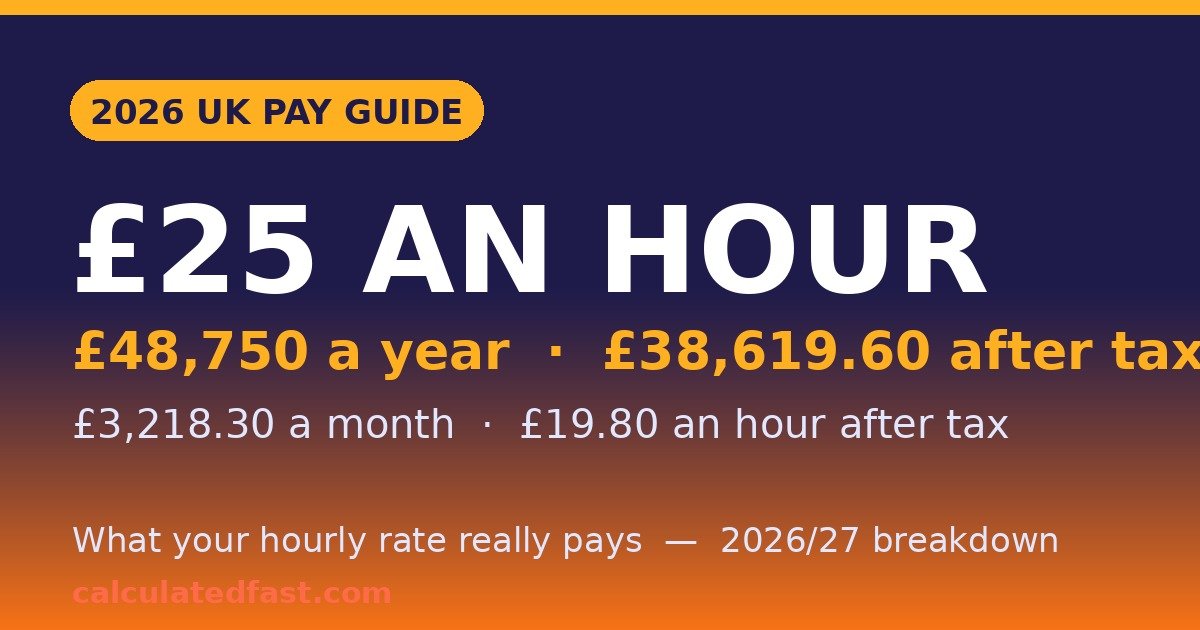
£25 an hour sounds like a strong wage — and it is. But the number on the job advert is not the number that lands in your bank account. On a standard 37.5-hour week it works out to £48,750 a year before tax, and £38,619.60 after income tax and National Insurance.
Convert your own hourly rate →
The short answer: £25 an hour is £48,750 a year
The conversion is simple: hourly rate × hours per week × 52 weeks. On the UK’s most common full-time contract — 37.5 hours a week, 52 paid weeks including holiday — £25 an hour gives you £48,750 a year before any deductions. That is £4,062.50 a month and £937.50 a week gross.
But the week length changes the answer completely. On a 40-hour week the same £25 an hour is £52,000 a year — £3,250 more for just 2.5 extra hours a week. Always check the contracted hours before comparing two £25-an-hour jobs, because the annual salary is whatever the hours make it.
And the gross figure is only half the story. Income tax and National Insurance take £10,130.40 of that £48,750, leaving £38,619.60 a year in your pocket — £3,218.30 a month, or £742.68 a week. Every figure in this guide uses the 2026/27 tax year, the standard 1257L tax code, England, Wales and Northern Ireland rates, and no pension contribution or student loan. A different tax code, a pension, a student loan or Scottish tax bands will move the take-home figure.
£25 an hour at different weekly hours
Because tax is charged in bands, take-home pay does not scale in a straight line with hours. The table below shows the same £25 an hour at five common working patterns, all for 2026/27 with no pension or student loan:
| Hours per week | Gross a year | Take-home a year | Take-home a month | Take-home a week |
|---|---|---|---|---|
| 20 hours (part-time) | £26,000 | £22,239.60 | £1,853.30 | £427.68 |
| 30 hours | £39,000 | £31,599.60 | £2,633.30 | £607.68 |
| 37.5 hours (standard full-time) | £48,750 | £38,619.60 | £3,218.30 | £742.68 |
| 40 hours | £52,000 | £40,717.40 | £3,393.12 | £783.03 |
| 45 hours (with overtime) | £58,500 | £44,487.40 | £3,707.28 | £855.53 |
Notice the pattern: at 20 hours you keep 85.5% of your gross pay, but at 45 hours you keep only 76.0%. The extra hours push more of your pay into higher tax. If you are paid only for the weeks you actually work — agency, term-time or zero-hours contracts — multiply by your paid weeks instead of 52. A term-time worker on 39 paid weeks, for example, earns £36,562.50 gross at 37.5 hours, not £48,750.
The 2026/27 tax breakdown on £48,750
Here is exactly where the £10,130.40 goes on a £48,750 salary in England, Wales or Northern Ireland:
| Slice of income | Rate | Amount |
|---|---|---|
| First £12,570 (Personal Allowance) | 0% | £0 |
| Next £36,180 (basic rate) | 20% | £7,236.00 |
| Income tax total | £7,236.00 | |
| National Insurance, 8% on £36,180 | 8% | £2,894.40 |
| Total deductions | £10,130.40 | |
| Take-home pay | £38,619.60 |
Your effective deduction rate is 20.8% — well below the 20% headline income tax rate plus National Insurance, because the first £12,570 is tax-free. Your marginal rate is 28%: every extra pound you earn at this salary is taxed at 20% income tax plus 8% National Insurance, so you keep 72p of it.
The £50,270 cliff matters. On a 40-hour week your £52,000 salary crosses the higher-rate threshold. The £1,730 above £50,270 is taxed at 40% income tax plus 2% National Insurance, so each extra hour past that point is worth only £14.50 in your hand, not £18.00. That is why the jump from 37.5 to 40 hours adds £3,250 gross but only £2,097.80 to your take-home.
To check the same maths on any salary, run it through our UK take-home pay calculator — it applies the same 2026/27 bands and shows the monthly and weekly figures too.
What £25 an hour is worth after tax
The headline rate is £25, but the rate that matters is what each hour is actually worth once HMRC has taken its share. On a 37.5-hour week, every hour you work is worth £19.80 after tax. A standard 7.5-hour day pays £187.50 gross and £148.54 after tax.
Put it against the legal floor and the gap is stark. The National Living Wage for workers aged 21 and over is £12.71 an hour from 1 April 2026, which is £24,784.50 a year on a 37.5-hour week — £23,965.50 less than £25 an hour. Even the voluntary Real Living Wage, set by the Living Wage Foundation at £13.45 an hour, sits £11.55 below it. At £25 an hour you earn almost double the legal minimum, which is why it feels like a comfortable wage in most of the country. The minimum wage rates are published on GOV.UK.
Is £25 an hour good pay in the UK?
Yes, by the official measure it is comfortably above average. The median full-time salary in the UK is £40,911 a year (ONS Annual Survey of Hours and Earnings, April 2026, provisional), which works out to about £20.98 an hour on a 37.5-hour week. At £48,750 you earn £7,839 — about 19% — more than the typical full-time worker. The ONS figures are in the Annual Survey of Hours and Earnings 2026 bulletin.
Location changes the picture, though. In the North East, where the median full-time salary is around £36,000, £48,750 puts you well ahead of most workers. In London, where the median is £49,789, £25 an hour is roughly an average salary — and London rents absorb far more of it. Our guide to the average salary in London in 2026 shows the same £48,750 leaving far less disposable income once housing is factored in.
Overtime, pension and student loans change the answer
Three things regularly move the take-home figure away from £38,619.60:
Overtime. An extra hour at £25 is worth £18.00 in your hand while you stay in the basic-rate band (37.5-hour week), but only £14.50 once your salary crosses £50,270 — which a 40-hour week already does. Overtime at time-and-a-half (£37.50 an hour) is worth £27.00 an hour after tax at the basic rate and £21.75 at the higher rate. Use our overtime pay calculator to work out what your own rota is really worth.
Pension. A 5% pension contribution (£2,437.50 a year) cuts your take-home to about £36,669.60 a year (£3,055.80 a month), because the contribution comes out before tax. That looks like a pay cut, but the money is yours — it goes into your pension pot, and your employer must add at least 3% on top.
Student loan. On a Plan 2 loan you repay 9% of earnings above £29,385, which is £1,742.85 a year on £48,750 — taking your pay to £36,876.75. Plan 5 costs £2,137.50 a year (9% above £25,000) and a Postgraduate Loan £1,665 (6% above £21,000). Check your own plan with our UK student loan repayment calculator.
What a £1 raise is worth: a rise from £25 to £26 an hour adds £1,950 a year gross on a 37.5-hour week, but £1,404 of it reaches your bank account after 28% marginal deductions. Run the numbers before you negotiate — our pay raise calculator shows the before-and-after take-home in seconds.
£25 an hour in Scotland
Income tax is devolved in Scotland, so the same £25 an hour leaves less in your pocket north of the border. Scotland has six bands instead of three: starter 19% to £16,537, basic 20% to £29,526, intermediate 21% to £43,662 and higher 42% to £75,000. National Insurance is the same UK-wide.
On £48,750 a Scottish taxpayer pays £8,457.05 of income tax (against £7,236.00 in England) and the same £2,894.40 of National Insurance, giving a take-home of £37,398.55 a year (£3,116.55 a month) — £1,221.05 less than in England, Wales or Northern Ireland. The gap widens as pay rises, because Scotland’s 42% higher rate starts at £43,663 while England’s 40% rate starts at £50,270.
What jobs pay £25 an hour?
£25 an hour is a realistic rate for skilled, experienced work rather than entry-level roles. You will see it advertised for qualified electricians and plumbers, HGV drivers, NHS Band 6 roles such as specialist nurses and senior physiotherapists, IT support technicians and experienced teaching assistants on agency rates. Self-employed tradespeople often charge more, but they pay their own tax, pension, holiday and sick pay out of it — so an employed £25 an hour is worth more than a self-employed £25 an hour. And always ask whether an agency rate includes holiday pay: some quotes roll it up inside the headline rate, which makes the real hourly rate lower than it looks.
Frequently asked questions
How much is £25 an hour a year?
£25 an hour is £48,750 a year before tax on a 37.5-hour week for 52 weeks, or £52,000 a year on a 40-hour week. After income tax and National Insurance the 37.5-hour figure is £38,619.60 a year.
How much is £25 an hour a month after tax?
£3,218.30 a month after tax on a 37.5-hour week in 2026/27, with the standard 1257L tax code and no pension or student loan. Gross, it is £4,062.50 a month.
How much is £25 an hour after tax per hour?
£19.80 an hour after tax on a 37.5-hour week. Each extra hour of overtime is worth £18.00 in your hand at the basic rate, or £14.50 once your pay crosses the £50,270 higher-rate threshold.
Is £25 an hour good pay in the UK?
Yes. It is about 19% above the UK median full-time salary of £40,911 (ONS, April 2026) and nearly double the £12.71 National Living Wage. It is roughly an average salary in London, but well above average in most other regions.
How much tax do you pay on £25 an hour?
On £48,750 a year you pay £7,236.00 of income tax and £2,894.40 of National Insurance — £10,130.40 in total, an effective rate of 20.8%. Your marginal rate is 28%, so you keep 72p of every extra pound.
What is £25 an hour in Scotland?
£37,398.55 a year after tax (£3,116.55 a month) on a 37.5-hour week — £1,221.05 less than in England, because Scotland’s income tax bands charge 21% from £29,527 and 42% from £43,663.
2 thoughts on “What Does £25 an Hour Really Pay in the UK? Hourly-to-Yearly Breakdown 2026”