The short answer
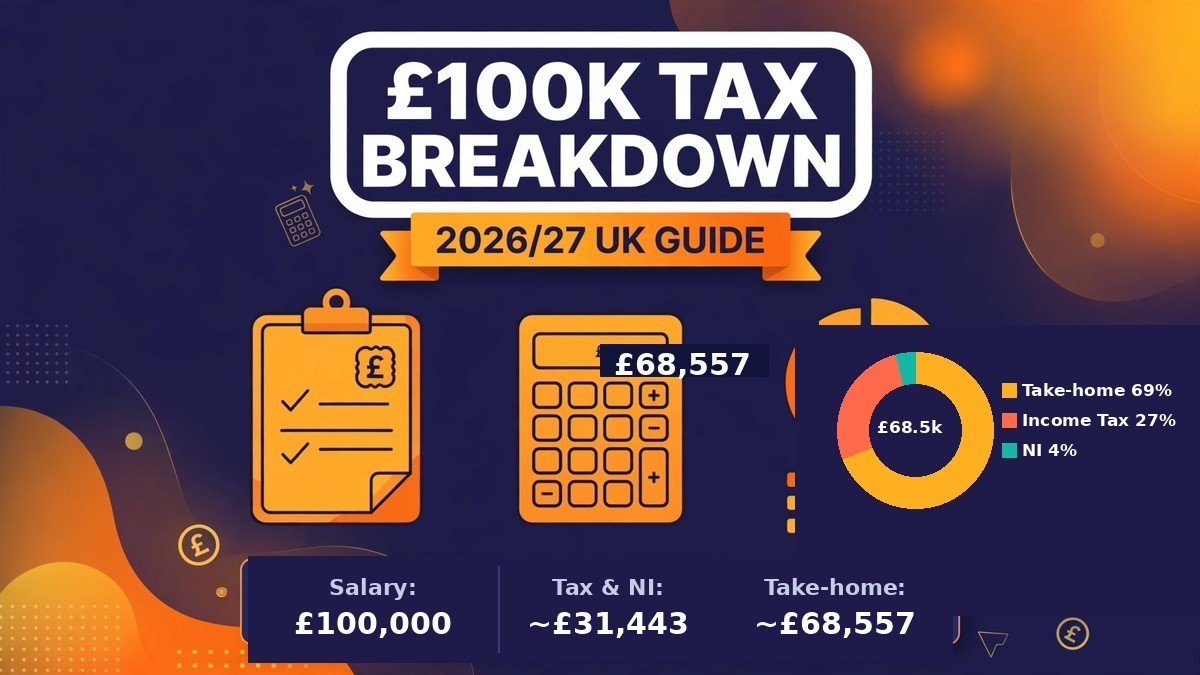
On a £100,000 salary in the UK in 2026/27 (England, Wales or Northern Ireland, standard tax code, no pension contributions or student loan), you pay £27,432 in income tax plus £4,010.60 in National Insurance — and keep £68,557.40.
Want your exact take-home after pension, student loan and tax code? Run the numbers in seconds.
Calculate my UK take-home pay →Full tax breakdown on £100,000 (2026/27)
UK income tax is charged in slices — you only pay each rate on the portion of income inside that band. The 2026/27 bands (frozen since 2021) are: £12,570 personal allowance at 0%, basic rate 20% from £12,571 to £50,270, higher rate 40% from £50,271 to £125,140, and the additional rate of 45% above £125,140. At exactly £100,000 you never touch the 45% band, and your personal allowance is still intact in full.
| Income slice | Rate | Tax due |
|---|---|---|
| £0 – £12,570 (personal allowance) | 0% | £0 |
| £12,571 – £50,270 (£37,700) | 20% | £7,540.00 |
| £50,271 – £100,000 (£49,730) | 40% | £19,892.00 |
| Total income tax | £27,432.00 | |
Notice that most of your income — over £37,000 of it — is still taxed at just 20%. Being a “higher-rate taxpayer” does not mean 40% on everything.
National Insurance on a £100k salary
Employee National Insurance is separate from income tax: 8% on earnings between £12,570 and £50,270, then 2% on everything above £50,270.
| Earnings slice | Rate | NI due |
|---|---|---|
| £12,571 – £50,270 (£37,700) | 8% | £3,016.00 |
| £50,271 – £100,000 (£49,730) | 2% | £994.60 |
| Total National Insurance | £4,010.60 | |
What £100,000 looks like per month, week and hour
| Period | Gross | Take-home |
|---|---|---|
| Annual | £100,000 | £68,557 |
| Monthly | £8,333.33 | £5,713.12 |
| Weekly | £1,923.08 | £1,318.41 |
| Daily (5-day week) | £384.62 | £263.68 |
| Hourly (40-hour week) | £48.08 | £32.96 |
Wondering how that hourly figure compares across salaries? See our breakdown of what $100,000 a year really pays per hour for the US comparison, or convert any hourly rate to a salary.
£100,000 vs other salaries: side-by-side
| Salary | Income tax | NI | Take-home | Effective rate |
|---|---|---|---|---|
| £60,000 | £11,432 | £3,210.60 | £45,357.40 | 24.4% |
| £80,000 | £19,432 | £3,610.60 | £56,957.40 | 28.8% |
| £100,000 | £27,432 | £4,010.60 | £68,557.40 | 31.4% |
| £120,000 | £39,432 | £4,410.60 | £76,157.60 | 36.5% |
The jump from £100k to £120k shows the trap in action: the extra £20,000 of salary only adds about £7,600 to your take-home, because the personal allowance starts tapering away (see below). A pay rise calculator is the quickest way to check whether a promotion actually pays.
The £100,000 tax trap: why earning more can cost you
At exactly £100,000 you still get the full £12,570 personal allowance — but the moment your adjusted net income creeps above £100,000, HMRC withdraws £1 of allowance for every £2 earned. By £125,140 the allowance is gone entirely.
Worked example — beating the trap with a pension: earn £110,000 and sacrifice £10,000 into your pension, and your adjusted net income drops back to £100,000. Your full personal allowance is restored. That £10,000 contribution saves roughly £6,000 of income tax (the 60% effective relief) plus £200 of National Insurance — so £10,000 lands in your pension at a take-home cost of only about £3,800. Nowhere else in the UK tax system does pension tax relief work this hard, and the compounding on that extra pension pot over 20–30 years is enormous — try our compound interest calculator to see it grow.
Two practical notes: once adjusted net income passes £100,000 you must file a Self Assessment tax return even if all your income is taxed through PAYE, and Gift Aid donations and pension contributions both reduce the income figure HMRC uses for the taper.
What about Scotland?
Scotland sets its own income tax bands. For 2026/27 the Scottish rates are: 19% starter (up to £3,967 of taxable income), 20% basic (£3,968–£16,956), 21% intermediate (£16,957–£31,092), 42% higher (£31,093–£62,430), 45% advanced (£62,431–£125,140) and 48% top above that. On a £100,000 salary a Scottish taxpayer pays about £30,732 in income tax versus £27,432 in England — roughly £3,300 more, for take-home of about £65,257. National Insurance is identical across the UK.
5 legitimate ways to keep more of a £100k salary
- Pension contributions — the single most powerful lever, especially inside the £100k–£125,140 trap zone where relief is effectively 60%.
- Salary sacrifice — pension or cycle-to-work via salary sacrifice also saves the 2% employee National Insurance above £50,270.
- Use your £20,000 ISA allowance — interest, dividends and gains inside an ISA are tax-free, and ISA income does not count toward the £100k taper figure.
- Check your tax code — being on the wrong code (after a job change, for example) can silently over- or under-deduct thousands.
- Charitable Gift Aid — donations extend your basic-rate band and reduce the adjusted net income used for the personal-allowance taper.
Buying a home on this salary? A £100,000 income typically supports borrowing of around £450,000 (4.5× multiple) — see how much house you can afford in the UK and run the exact repayments in our UK mortgage calculator.
Get your precise take-home with pension, student loan and bonus included.
Open the UK take-home pay calculator →Frequently asked questions
How much tax do I pay on £100,000 in the UK?
In 2026/27 you pay £27,432 in income tax and £4,010.60 in employee National Insurance on a £100,000 salary — £31,442.60 in total deductions, assuming a standard tax code with no pension contributions or student loan.
What is my take-home pay on £100,000?
About £68,557 a year, which is £5,713 a month or £1,318 a week after income tax and National Insurance.
Do I pay 40% tax on all my £100,000?
No. Only the slice between £50,271 and £100,000 is taxed at 40%. The first £12,570 is tax-free and £37,700 is taxed at 20%. Your effective income-tax rate is 27.4% — well below 40%.
What is the £100k tax trap?
Above £100,000 of adjusted net income, HMRC withdraws £1 of personal allowance for every £2 earned, until it disappears at £125,140. That creates an effective 60% marginal income-tax rate (62% with NI) on income between £100,000 and £125,140.
How can I avoid the 60% tax trap?
Pension contributions (including salary sacrifice) reduce your adjusted net income. Bringing £110,000 down to £100,000 with a £10,000 pension contribution restores your full personal allowance and saves about £6,200 in tax and NI. Gift Aid donations work the same way.
Do I need to file a tax return if I earn over £100,000?
Yes. Anyone with adjusted net income above £100,000 must file a Self Assessment tax return, even if all income is taxed through PAYE. The deadline is 31 January after the tax year ends.
Sources: GOV.UK — rates and thresholds for employers 2026 to 2027; UK income tax rates and bands 2026/27. Figures are estimates based on 2026/27 rates and are not financial advice.